Proline
628 mg/kg
Lower limit in report: 300 mg/kg
Measured value is 2.09× the lower limit.
A sample of the blossom honey we sell was analysed by Erzurum Food Control Laboratory Directorate in Türkiye (October 13, 2026, report no. 2601701836/00). Below are the values examined, with the limits stated in the report, explained in plain language.
Blossom honey · Analysis summary
All 5 parameters examined were found compliant in the report.
628 mg/kg
Lower limit in report: 300 mg/kg
Measured value is 2.09× the lower limit.
0.12%
Upper limit in report: 5%
Below the limit.
Compliant73.39%
Lower limit in report: 60%
Above the lower limit.
Compliant1.11
Range in report: 0.9–1.4
Within the stated range.
Compliant2.09%
Upper limit in report: 4%
Below the limit.
CompliantThe blossom honey sample was found compliant in all 5 criteria assessed in the report.
Our promise
If an analysis shows anything contrary to what we state about our honey, we take full responsibility.
The parameters checked in a honey analysis help show whether the honey was ripened by the bees and whether its composition is typical. No single value tells the whole story; they are read together.
Lower limit in report: 300 mg/kg · Compliant
Proline is the most abundant amino acid in honey, and most of it comes from the bees’ own secretions. It is therefore treated as one indicator that the honey was processed and ripened by bees. A value well above the stated lower limit suggests the honey was properly worked in the hive.
Upper limit in report: 5% · Compliant
Sucrose is the chemical name for table sugar. Bees break down the sucrose in nectar into fructose and glucose with their enzymes, so ripe honey contains very little of it. A high value may point to early harvesting or to bees being fed sugar.
Lower limit in report: 60% · Compliant
Fructose and glucose are honey’s main sugars and make up most of its dry matter. A total above the stated minimum shows the sugars were converted by the bees; low values can indicate an unusual composition.
Range in report: 0.9–1.4 · Compliant
The fructose-to-glucose ratio hints at how the honey crystallises: the more glucose, the faster it sets. A ratio within the stated range is typical of blossom honey. Crystallisation is a natural process and does not mean the honey has spoiled.
Upper limit in report: 4% · Compliant
Maltose is a sugar that can occur naturally in honey in small amounts. Maltose above the stated limit is checked separately because it can suggest blending with starch-based syrups.
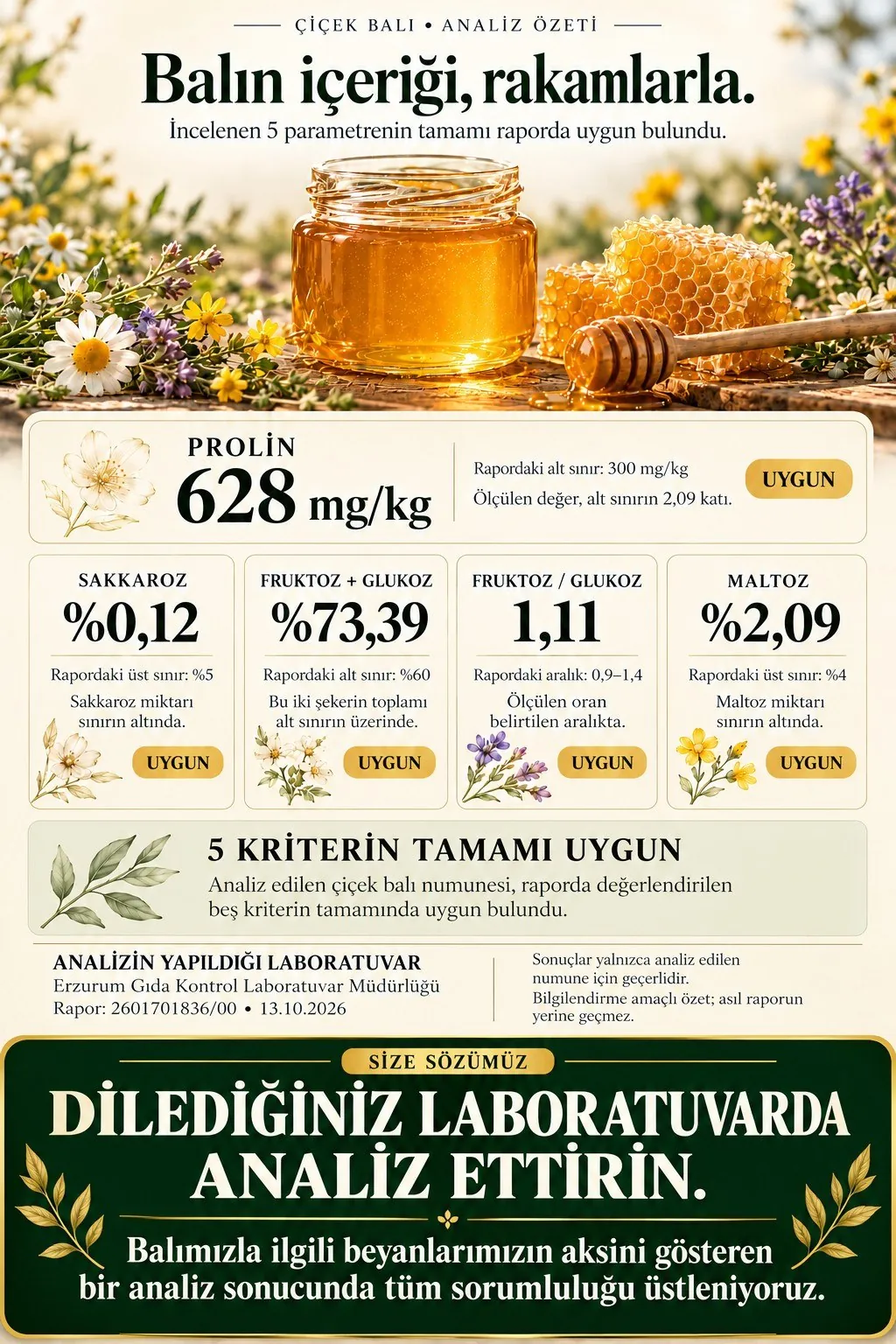
The sample was analysed by Erzurum Food Control Laboratory Directorate. Report date October 13, 2026, report number 2601701836/00.
As a rule, laboratory results apply only to the sample analysed. We publish the updated report on this page for new harvests and batches.
Yes. You can have the honey you buy tested at any laboratory you choose. If the result contradicts what we state about our honey, we take full responsibility.
No. Crystallisation comes from honey’s natural sugar make-up and happens faster in cool places. Stand the jar in warm water (no hotter than 40 °C) and it will become runny again.
Of course. Just message us on WhatsApp and we will share the full report with you.
Order now from ₺1,250
Ask us anything about the honey, delivery or payment on WhatsApp and we will reply in writing.