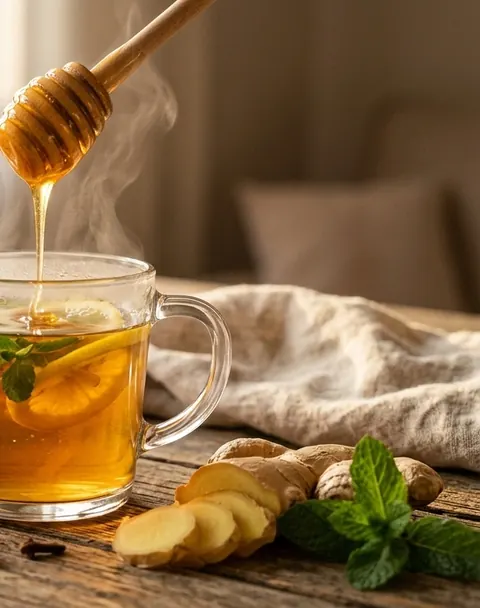
No, putting honey in hot tea does not make it toxic. Heat does change honey: very hot liquid reduces some of its natural enzymes and drives off delicate aromas, and prolonged heating raises a compound called HMF. But the short contact in a cup of tea forms only tiny amounts, so the practical advice is simple: let your tea cool for a few minutes before adding honey, mainly to enjoy its flavour.
That is the short answer. The longer one is worth knowing, because the internet is full of alarming posts on this topic, and most of them mix a real chemical fact with a lot of exaggeration.
Where the "heated honey is poison" idea comes from
The claim usually rests on three things:
- HMF (hydroxymethylfurfural). This compound forms when sugars are heated, especially in acidic conditions, and honey is both sugary and slightly acidic. HMF is used as an indicator of heat damage and age in honey.
- Traditional beliefs. Some traditional systems, notably Ayurveda, warn against heating honey. These are cultural teachings rather than modern food safety findings.
- Lab studies at high heat. Some experiments heat honey to high temperatures for long periods, then report large increases in HMF. Headlines then apply those results to a spoonful in a mug of tea.
The jump from "HMF rises when honey is heated for a long time" to "honey in tea is toxic" is where the argument breaks down.
What HMF really is
HMF is not unique to honey. It forms naturally whenever sugary foods are heated or stored, and it is found in many everyday foods such as coffee, bread crust, dried fruit, fruit juices, jams and caramel. Food scientists track it because it is a useful marker of processing and storage.
In honey, HMF is mostly a quality indicator rather than a safety alarm. International and EU standards, and the Turkish Food Codex, set a limit of 40 mg/kg for HMF in general honey. Fresh, carefully handled honey is usually well below that. A high HMF value tells you the honey was overheated during processing, stored warm for a long time, or is simply old. It is one of the tests in a standard honey analysis, which we describe in honey lab tests explained.
Does a cup of tea raise HMF much?
HMF formation depends on temperature and time together. Industrial overheating, or storing honey in a hot warehouse for months, gives HMF plenty of both. A teaspoon of honey stirred into tea is a very different situation:
- the honey is diluted in a large volume of water,
- the tea starts cooling the moment it is poured,
- and you drink it within minutes.
Under these conditions the additional HMF is very small. There is no good reason to think that a few spoonfuls of honey in tea each day are a meaningful source compared with the rest of a normal diet.
What heat genuinely changes
The worry about toxicity is overblown, but heat is not harmless to honey's character. Here is what actually happens as temperature rises:
| What is affected | What heat does | Does it matter in tea? |
|---|---|---|
| Aroma compounds | Volatile flavour notes evaporate quickly | Yes, this is the most noticeable loss |
| Enzymes (diastase, invertase, glucose oxidase) | Gradually deactivated by heat | Partly; raw honey's enzymes are reduced in very hot tea |
| HMF | Rises with heat and time | Only slightly in a quickly-drunk cup |
| Sugars and calories | Unchanged | No difference at all |
| Crystals | Dissolve | Useful; crystallized honey melts easily in warm tea |
So the honest summary is that very hot tea turns your honey into a pleasant sweetener with less of its own personality. If you paid for a good raw honey with a distinctive floral taste, that is a bit of a waste. That is a flavour argument rather than a safety one.
How to use honey in tea sensibly
You do not need a thermometer. A few habits are enough:
- Brew, then wait. Let freshly boiled tea sit for three to five minutes, or until it is comfortable to sip. At drinking temperature the honey keeps much more of its aroma.
- Add honey last. Stir it in just before drinking rather than adding it to the teapot or kettle.
- Use a dry spoon. Dipping a wet spoon into the jar adds water, which over time can encourage fermentation. See does honey expire? for why moisture matters.
- Match the honey to the tea. Mild flower honey suits black and green tea; strong honeys like chestnut can overpower delicate teas but work well with herbal infusions.
- Try the Turkish way. In Türkiye, honey is more often eaten alongside tea at breakfast than stirred into it: a spoon of honey with bread, butter or kaymak, and a glass of strong black tea on the side. You get the full flavour of both. Our article on bal kaymak and Turkish breakfast explains the tradition.
What about cooking and baking?
Cakes, glazes and sauces expose honey to far higher temperatures than tea does. Baked honey loses its raw character entirely and behaves simply as a flavourful sugar. That is perfectly fine, and many classic recipes depend on it. Just reserve your best raw honey for drizzling and use it in recipes where its taste matters. For baking, a milder and less expensive flower honey is usually the better choice.
A few points of perspective
- Honey is mostly fructose and glucose with around 17–20% water. Whether hot or cold, it is a sugar, and it should be used in moderation. People with diabetes or other conditions should ask their doctor how honey fits into their diet.
- Honey should never be given to babies under 12 months old, whether in tea, milk or food, because of the risk of infant botulism. Heating it in a drink does not make it safe for infants.
- If you read a dramatic claim online, check whether it describes honey heated for hours at high temperature or honey in an ordinary drink. The difference is enormous.
Conclusion
Hot tea does not turn honey into poison. It does dull its aroma and reduce some of the enzymes that make raw honey special, and very long or intense heating raises HMF. The sensible approach is easy: let your tea cool a little, add the honey at the end, and save your best honey for moments when you can actually taste it.
If you are looking for a raw flower honey to enjoy with your tea, you can see our honey. We call every customer to confirm the order; you then pay by bank transfer, and we ship as soon as it arrives and send you the tracking number. If you have questions about storage or use, just call us before ordering.
Frequently asked questions
Is honey toxic when added to hot tea?
No. Heat increases a compound called HMF, but the brief contact in a cup of tea forms only very small amounts. HMF is also found in many common heated foods such as coffee, bread crust and dried fruit.
At what temperature should I add honey to tea?
There is no need to measure. Let freshly boiled tea rest for a few minutes until it is comfortable to drink, then stir in the honey. This keeps more of the honey's aroma and natural enzymes.
Does hot water destroy the nutrients in honey?
Heat reduces some enzymes and evaporates aroma compounds, but the sugars, which make up most of honey, are unchanged. The main practical loss in very hot tea is flavour.
Is it better to eat honey with tea instead of in it?
It is a matter of taste. Eating honey alongside tea, as is common at a Turkish breakfast, lets you enjoy the full flavour of the honey, while stirring it into slightly cooled tea is a convenient way to sweeten your drink.