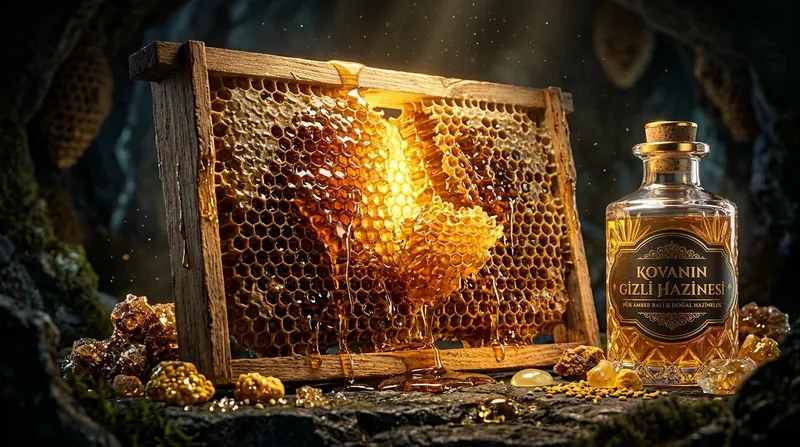
Besides honey, a beehive produces beeswax (secreted by young worker bees to build comb), pollen (collected from flowers as the colony's protein food), bee bread or perga (pollen fermented and stored in the comb), propolis (plant resins the bees use to seal the hive) and royal jelly (a secretion fed to larvae and the queen). Each has a different origin, texture and use, and each is harvested in its own way.
You will see all of these at Turkish markets, pharmacies and herbalists (aktar). This guide explains what they are, factually. It does not make health claims, and we do not sell these products; our shop sells only raw blossom honey.
Quick overview
| Product | Turkish name | Made from | Made by | Typical form on sale |
|---|---|---|---|---|
| Beeswax | Bal mumu | Wax glands of the bee | Young worker bees | Blocks, sheets, candles |
| Bee pollen | Polen | Flower pollen packed with nectar | Forager bees | Small coloured granules |
| Bee bread | Perga, arı ekmeği | Pollen stored and fermented in comb | Worker bees | Small hexagonal pellets |
| Propolis | Propolis | Plant resins plus wax | Forager bees | Raw lumps, extracts, sprays |
| Royal jelly | Arı sütü | Gland secretions of nurse bees | Nurse worker bees | Fresh jelly, refrigerated |
Beeswax (bal mumu)
Beeswax is the building material of the hive. Young worker bees produce it as tiny flakes from glands on the underside of their abdomen, chew it and shape it into hexagonal cells. It is also used to cap ripe honey cells.
Producing wax takes a lot of energy, so bees consume honey to make it. That is one reason modern beekeepers reuse comb after extraction (the process is described in how bees make honey).
How it's harvested: mostly from the cappings cut off during honey extraction and from old combs, which are melted, filtered and poured into blocks.
Common uses: candles, wax foundation sheets for hives, food wraps, wood polish and cosmetics. When you eat comb honey, you are eating beeswax too; it is edible, though it passes through undigested. See honeycomb: how to eat and store it.
Bee pollen (polen)
Pollen is the male reproductive powder of flowers. Foragers collect it on their hairy bodies, moisten it with a little nectar and pack it into "pollen baskets" on their hind legs. Back in the hive it is the colony's main source of protein, needed to feed larvae.
How it's harvested: beekeepers fit a pollen trap at the entrance, a grid that gently knocks some of the pellets off the bees' legs as they enter. The pellets fall into a tray and are then dried or frozen.
What you see: colourful granules, yellow, orange, brown, sometimes purple, depending on the plants. The colour mix tells you something about the flowers nearby.
Important: pollen can cause allergic reactions in sensitive people. Anyone with pollen or bee allergies should avoid it unless a doctor says otherwise.
Pollen is also present in small amounts in honey, which is what laboratories use for origin testing; see pollen analysis and honey's botanical origin.
Bee bread (perga)
Bee bread is pollen the colony has stored. Workers pack pollen into cells, add nectar or honey and secretions, and cover it with a thin layer of honey. Over time it undergoes a lactic fermentation, similar in principle to how vegetables are pickled, which preserves it.
How it's harvested: the comb containing bee bread is removed and the pellets are separated, often by drying and breaking the comb, or picked out by hand. It is more labour-intensive than collecting fresh pollen.
What you see: firm, slightly sour, hexagonal pellets, often sold in small jars. In Türkiye it is usually labelled "perga".
Propolis
Propolis is sometimes called "bee glue". Bees collect sticky resins from tree buds and bark, such as poplar, pine and other trees, carry them home on their legs and mix them with wax. They use it to seal cracks, narrow the entrance and coat the inside of the hive.
How it's harvested: by scraping it off frames and hive walls, or by using a propolis trap, a plastic sheet with slits that bees fill with propolis; the sheet is then frozen so the brittle propolis breaks off.
What you see: raw propolis is a dark brown or reddish, sticky lump that hardens in the cold. It is commonly sold dissolved in alcohol or other solvents as drops, in sprays or as an ingredient in cosmetics and lozenges. Its composition varies widely with local trees.
Important: propolis can cause allergic skin reactions. Extracts often contain alcohol. Follow product labels and ask a doctor or pharmacist before use, especially for children, during pregnancy or if you take medication.
Royal jelly (arı sütü)
Royal jelly is a milky white, slightly sour secretion produced by glands in the heads of young nurse bees. All larvae receive it in their first days; larvae chosen to become queens are fed it in abundance throughout development, and the adult queen continues to be fed by workers. Its role in queen development is explained in inside a beehive.
How it's harvested: a specialised process. Beekeepers graft very young larvae into artificial queen cups, place them in a queenless colony, and a few days later remove the larvae and collect the small amount of jelly from each cup. The yield per hive is low, which is why it is expensive.
Storage: fresh royal jelly is perishable and should be kept refrigerated or frozen. It is also sold freeze-dried, in capsules or mixed with honey.
Important: royal jelly can trigger allergic reactions, including serious ones in people with asthma or allergies. Consult a doctor before using it.
Buying bee products in Türkiye: a short checklist
- Look for a proper label: producer, address, batch number and best-before date.
- Check storage conditions: royal jelly should be cold; pollen and perga should be dry and sealed.
- Be wary of health promises. Under Turkish rules, foods may not be advertised as treating or preventing disease, so bold claims on packaging are a warning sign rather than a reassurance.
- Ask about origin: region and harvest time are reasonable questions for any seller.
- Mind allergies: all of these products can cause reactions in some people.
The same buyer habits apply to honey: a clear label, a traceable seller and a willingness to answer questions matter more than impressive wording on the jar.
Conclusion
A hive is a small factory with several outputs: wax for building, pollen and bee bread for protein, propolis for sealing and royal jelly for raising young. Honey, the bees' energy store, is the best known. We focus on that one thing: a raw blossom honey with its lab analysis published on our lab analysis page. You can see it on the product page or ask us anything on WhatsApp.
Frequently asked questions
What is the difference between bee pollen and bee bread?
Bee pollen is collected fresh from foragers' legs at the hive entrance. Bee bread (perga) is pollen the bees have packed into comb cells with honey, where it ferments and is preserved.
Is royal jelly the same as honey?
No. Honey is made from nectar and stored as food. Royal jelly is a secretion produced in the glands of nurse bees and fed to larvae and the queen.
Where does propolis come from?
Bees collect resins from tree buds and bark and mix them with wax. They use the result to seal gaps and coat the inside of the hive.
Can beeswax be eaten?
Yes, beeswax in comb honey is edible. The body does not digest it, and it simply passes through.
Are bee products safe for everyone?
Not necessarily. Pollen, propolis and royal jelly can cause allergic reactions, and honey must not be given to babies under 12 months. Ask a doctor if you have allergies, asthma or other conditions.